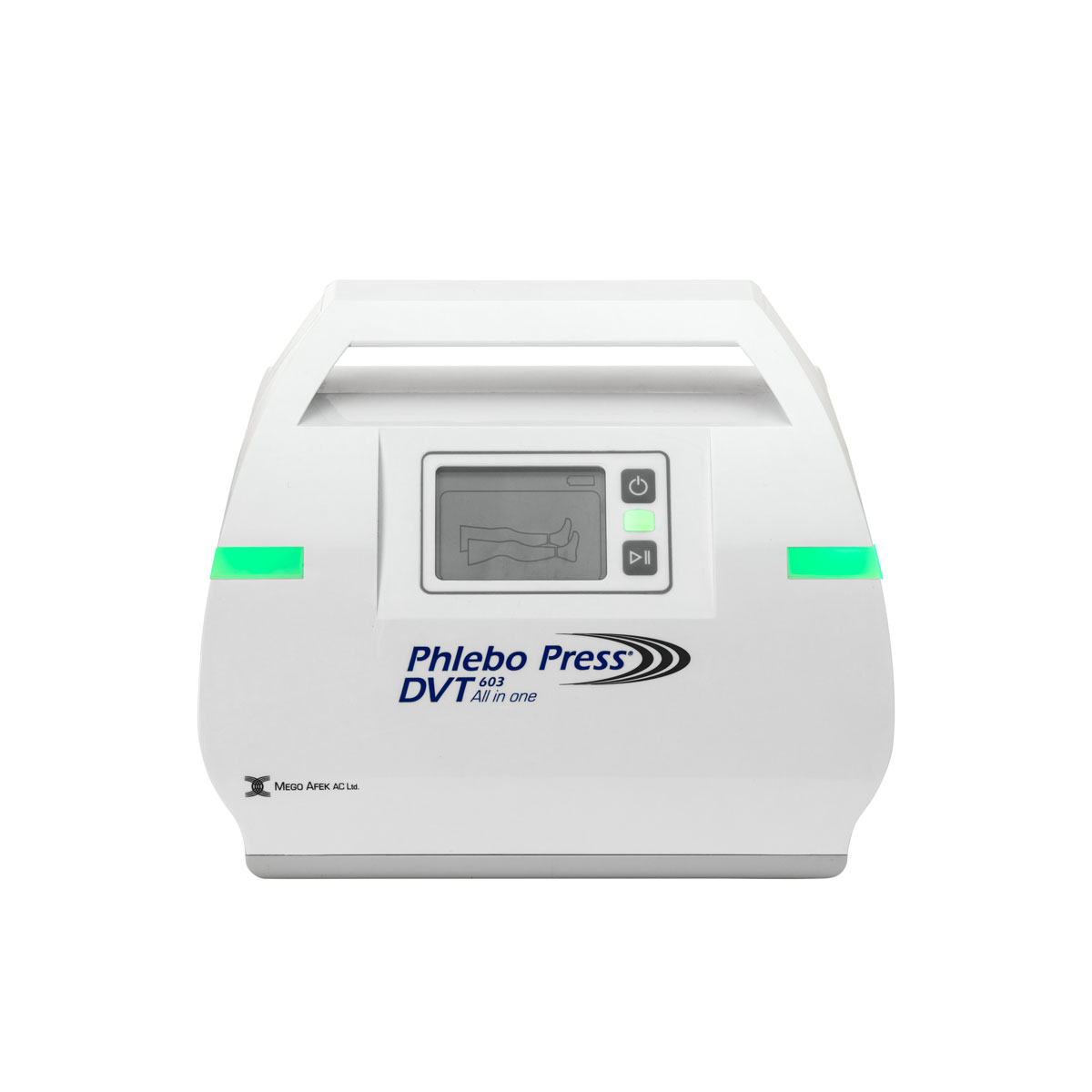
One device for leg and foot indications
The Phlebo Press® DVT 603 is a mobile device for intermittent pneumatic compression (IPC) and the all-in-one system of the Phlebo Press® technology. It automatically recognises the connected compression garment and selects the matching pressure and sequence — as a mechanical measure of thromboprophylaxis and, with a foot garment, for further indications at the foot.
- Automatic garment detection: the device recognises which garment is connected and adjusts the pressure range accordingly.
- Two pressure ranges: 45 mmHg on the leg garment, 130 mmHg on the foot garment — left and right at different pressures if needed.
- Graduated pressure gradient: sequential leg garments fill distal → proximal (45, 42, 39, 36 mmHg).
- Leg and foot garments — sequential or intermittent, also in combination on one device.
- Quiet operation (≤ 50 dBA) — suitable for the night shift and multi-bed rooms.
- Battery operation up to 8 h for unrestricted patient mobility.
- Device instruction under § 4 (3) MPBetreibV by the UniCare team.
Technical data
| Device type | Mobile IPC compression device (all-in-one) |
|---|---|
| Pressure ranges | 45 mmHg (leg) and/or 130 mmHg (foot), selected automatically |
| Pressure gradient (sequential) | 45, 42, 39, 36 mmHg (distal → proximal) |
| Treatment cycle | intermittent, ~1×/min (60 s per cycle, both legs) |
| Pressure accuracy | ± 5 mmHg (@ 45 mmHg) · ± 13 mmHg (@ 130 mmHg) |
| Garment detection | automatic (type, side, sequential/intermittent) |
| Noise level | ≤ 50 dBA |
| Battery runtime | up to 8 h (depending on garment combination) |
| Ingress protection | IP21 |
| Weight | 2.5 kg |
| Dimensions | 227 × 197 × 176 mm |
| Protection class | II · continuous operation |
| Expected service life | 5 years |
| Conformity | CE-certified medical device (CE 0344), compliant with the MDR |
| Manufacturer | Mego Afek AC Ltd. (Israel) |
Specifications per the manufacturer’s manual (L9810130-N, © 2024 Mego Afek). For binding figures please refer to the current data sheet — request it from us.
Areas of use
IPC is used in the hospital as a mechanical measure of thromboprophylaxis. With leg and foot garments, the 603 covers a broader range of indications. The indication is determined by the treating professionals. Typical areas of use:
- Prevention of deep vein thrombosis (DVT) in susceptible patients
- Postoperative thromboprophylaxis (surgery, orthopaedics, vascular surgery, gynaecology)
- Intensive care for immobilised patients
- When pharmacological prophylaxis is contraindicated (e.g. acute bleeding risk, HIT)
- As an addition to pharmacological prophylaxis in high-risk settings
- With a foot garment, additionally: enhancement of venous circulation and reduction of oedema (per manufacturer indication)
The selection and change of compression garments is explained in the consumables overview.
Frequently asked questions
How does the 603 differ from the 650 Easy?
The Phlebo Press® DVT 603 is the all-in-one system: it automatically recognises the connected garment type and selects the matching pressure — 45 mmHg on the leg garment, 130 mmHg on the foot garment. It also works with a graduated sequential pressure gradient and can serve a leg and a foot garment at the same time. The 650 Easy works exclusively at 45 mmHg on the leg garment and is designed for the mobile standard use case.
How is the compression pressure set?
Not manually: at the start of treatment the 603 runs a short scan, identifies the connected compression garment (leg or foot, sequential or intermittent) and sets pressure and sequence automatically. Apply the garment, connect, switch on.
What is the difference between the foot and leg garment?
The single-chamber foot garment works intermittently at 130 mmHg for indications at the foot. Leg garments (calf, calf & thigh) work at 45 mmHg — sequentially in a gradient from distal to proximal (45, 42, 39, 36 mmHg) or intermittently. The 603 detects which garment is connected and can serve the left and right limb at different pressures.
How loud is the device in operation?
The noise level is up to 50 dBA — quiet enough for the night shift and multi-bed rooms.
When is mechanical thromboprophylaxis not suitable?
Intermittent pneumatic compression is contraindicated, among others, in known or suspected acute deep vein thrombosis, severe cardiac failure and advanced arterial occlusive disease; separate contraindications apply to the foot garment. The indication is determined by the treating professionals; we provide the necessary usage information.
Does nursing staff receive an instruction?
Yes. Delivery includes a device instruction under § 4 (3) MPBetreibV — on site, documented in writing, and on request during shifts and as a refresher when staff change.